Cookies help us deliver our services. By using our services, you agree to our use of cookies. Learn more


Resources
-
- October 28, 2026
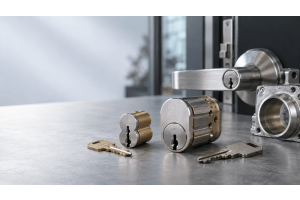
SFIC (Small Format Interchangeable Core) and LFIC (Large Format Interchangeable Core) are two different commercial lock core systems that cannot be directly interchanged. SFIC uses a standardized compact format, while LFIC or FSIC typically follows manufacturer-specific designs. Choosing a compatible replacement requires checking the lock housing, core format, manufacturer, keyway, pin configuration, keying system, and control key. Physical fit alone does not guarantee compatibility. For facilities managing multiple doors, identifying existing hardware and maintaining consistent core systems can simplify replacements, improve key management, and reduce maintenance issues.
-
- October 27, 2026
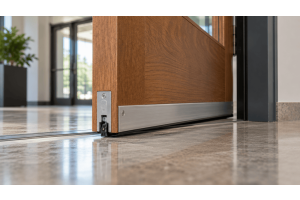
An automatic door bottom helps seal the gap beneath a door by lowering against the floor or threshold when the door closes and retracting when it opens. Unlike a fixed door sweep, it reduces continuous floor contact, making it useful where dragging or wear is a concern. Choosing between the two depends on the opening, gap size, floor condition, and installation requirements. Automatic door bottoms come in surface-mounted, semi-mortise, and full-mortise options, each requiring careful checks of door dimensions, mounting style, seal drop, handing, and compatibility before ordering.
-
- October 26, 2026
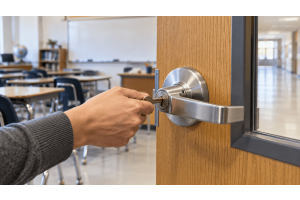
Classroom security locks give authorised staff room-side control of the corridor lever while keeping the inside lever usable for exit. Unlike a traditional classroom function, they allow the outside lever to be secured from inside the room. Choosing the right replacement means checking more than the function name, including the lock platform, inside and outside operation, door preparation, keyway or core system, fire-rating requirements, accessibility needs, and any existing access-control setup.
-
- October 25, 2026
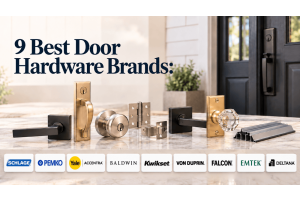
Choosing the right door hardware comes down to more than just the brand name. Schlage, Emtek, Baldwin, Kwikset, Yale/ASSA ABLOY ACCENTRA, Pemko, Von Duprin, Falcon, and Deltana each suit different residential, commercial, and specialty applications. The right choice depends on the door’s function, traffic level, preparation, finish, keying needs, dimensions, and compatibility with existing hardware. Comparing these factors at the product level helps ensure better fit, performance, and long-term reliability.
-
- October 25, 2026
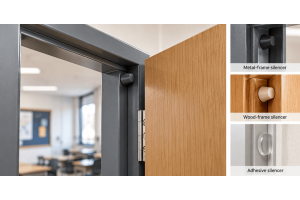
A door silencer is a small rubber bumper that cushions the door where it meets the frame stop, helping reduce impact noise and closed-door rattle. Choosing the right replacement starts with the frame material and mounting method, since metal-frame, wood-frame, and adhesive silencers are not interchangeable. Check the existing preparation, dimensions, mounting style, and all silencer locations before ordering. If the door is closing too fast, the closer—not the silencer—is usually the part that needs attention.
-
- September 24, 2026
Government and public facilities need door hardware that balances accessibility, security, durability, fire and egress requirements, and long-term maintenance. The right setup depends on the opening, from public entrances and staff areas to records rooms, stair doors, loading entrances, and restricted spaces. Security zoning, lock functions, electronic access, master keying, exit devices, closers, hinges, and lifecycle performance all play a role in creating a practical, code-conscious hardware specification.
-
- September 10, 2026
A "UL Listed" label on commercial door hardware indicates certification for specific safety, fire, or security conditions, not a universal approval. Buyers must match the exact UL standard to the opening. UL 10C governs fire-rated assemblies, UL 305 covers panic hardware, and UL 294 applies to access control systems. Assuming any UL-rated lock works on a fire door is a costly mistake. Always verify the exact product certification against your specific door requirements before ordering to guarantee code compliance, avoid failed inspections, and maintain building safety.
-
- September 09, 2026
Specifying school door hardware balances lockdown security with free egress, accessibility, and fire safety. Classrooms need approved locks for inside security without trapping students or blocking responders. Strictly avoid non-compliant aftermarket barricades. Match hardware to the space: gyms require heavy-duty panic bars, while labs need storeroom locks. Survey existing door preparations before retrofitting. Standardizing hardware district-wide simplifies key control, ensures code compliance, and lowers long-term maintenance costs.
-
- September 07, 2026
Specifying hotel door hardware requires treating every opening as a unique system, from guest rooms to service doors. A successful hospitality project evaluates existing door preparations, daily traffic, and specific access needs before ordering. Whether integrating smart lock platforms, ensuring ADA compliance, maintaining fire ratings, or adding acoustic sealing, every hardware choice matters. By standardizing hardware sets and matching existing preps during renovations, hotel teams can guarantee code compliance, improve guest experiences, and control future maintenance costs.
-
- September 06, 2026
This guide explains how to choose and manage door hardware for multifamily properties by treating each opening according to its specific security, access, fire-safety, accessibility, and maintenance needs. It covers apartment unit entries, common areas, controlled entrances, stair and fire-rated doors, closers, hinges, electronic access, keying systems, finishes, and portfolio-wide standardisation. The key takeaway is that the best hardware strategy balances code compliance, resident convenience, durability, turnover management, and long-term serviceability rather than focusing only on upfront product cost.

Recent Posts