Cookies help us deliver our services. By using our services, you agree to our use of cookies. Learn more


Door Silencers for Commercial Frames: Types, Fit and Replacement
- October 25, 2026

A noisy commercial door does not always need a major repair. Sometimes the problem is a missing, cracked, or hardened door silencer—the small rubber bumper on the frame stop that cushions the door as it closes. The part is simple. Matching the replacement is where people get tripped up, because metal-frame, wood-frame, and adhesive silencers do not all install the same way.
This guide walks through the fit check in plain English: what a door silencer does, how to identify the type already on the opening, what to look at before you order, and when the noise is really pointing to the door closer, latch, or another part of the opening.
What Is a Door Silencer?
|
Quick Answer: A door silencer is a small rubber or resilient bumper installed on the stop of a door frame. It cushions the contact between the closing door and the frame, which helps reduce impact noise and closed-door rattle. The right replacement depends on the frame material and the way the silencer mounts, so a metal-frame silencer, wood-frame silencer, and adhesive silencer should not be treated as interchangeable parts. |
Think of the silencer as the door’s small contact cushion. It is part of the frame, not the bottom of the door, and it does not control how fast the door moves. That distinction matters when someone reports a “noisy door,” because several different pieces of hardware can create very different kinds of noise.
|
Hardware |
What it actually does |
|
Door silencer |
Cushions the door where it meets the frame stop and helps reduce impact and rattle. |
|
Door closer |
Controls the door’s closing motion and speed. |
|
Door sweep |
Seals the gap along the bottom of the door with a fixed blade, brush, or similar insert. |
|
Automatic door bottom |
Uses a movable seal that drops when the door closes and retracts when it opens. |
|
Perimeter gasketing / weatherstripping |
Seals gaps around the head and sides of the opening for air, light, sound, smoke, or weather control, depending on the product. |
If the complaint is air, light, or sound leaking around the opening rather than a knock at the frame stop, start with Door Weatherstripping Types. If the problem is at the bottom gap, see the Door Sweep and Threshold guide or the Automatic Door Bottom guide.
How Does a Door Silencer Work?
A door silencer works by giving the closing door a small resilient surface to land against instead of letting the door hit the frame stop directly. The rubber compresses slightly at contact, which softens the impact and can help keep the closed door from rattling in the frame.
1. The door swings toward the closed position.
2. The door reaches the silencer on the frame stop.
3. The rubber or resilient material compresses under contact.
4. The latch engages the strike while the door rests against the silencer contact points.
5. If the silencers are correctly matched and positioned, the closed door should have less metal-to-metal impact and less movement at the stop.

What Types of Door Silencers Are Available?
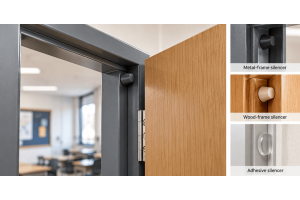
For replacement work, the easiest way to sort door silencers is by the frame and mounting method. Start there before you compare color, head size, or product photos.
Press-Fit Silencers for Hollow Metal Frames

If you need to reduce door-closing noise and cushion contact between the door and frame, this Rockwood rubber door silencer is one option to consider. Before ordering, confirm the frame type, mounting location, quantity required, and compatibility with the existing opening.
Rockwood 608 Gray Rubber Door Silencer View Product →
Press-fit, sometimes called push-in, silencers are commonly used on hollow metal frames that already have small prepared holes in the frame stop. The stem pushes into the prepared hole, and the rubber head stays slightly proud of the stop so the door contacts the silencer first. A good DFP example is the Rockwood 608 Gray Rubber Door Silencer. Rockwood identifies the 608-RKW for metal-frame use. DFP also carries the Ives SR64BG Door Silencer for Metal Frames.
Door Silencers for Wood Frames
Wood-frame silencers use a different attachment method from a typical push-in metal-frame silencer. Manufacturers such as Rockwood and Ives list separate wood-frame models, which is a good reminder that two small rubber bumpers can look similar and still be built for different frames.
Adhesive-Backed Silencers
Adhesive-backed silencers stick to a suitable clean surface instead of using a prepared hole. They can be useful where the application calls for a no-drill option, but they are not a universal replacement for a specified press-fit or wood-frame model. Surface condition, projection, and the manufacturer’s intended use still matter.
|
Type |
Typical application |
Attachment |
What to check |
|
Press-fit / push-in |
Prepared hollow metal frame |
Stem fits into a prepared hole |
Frame type, existing hole/prep, model dimensions, cut sheet |
|
Wood-frame silencer |
Wood frame or stop |
Model-specific fixing |
Frame material, size, fixing method, instructions |
|
Adhesive-backed |
Suitable unprepared surface |
Self-adhesive |
Surface condition, projection, product suitability |
How Do You Know Which Door Silencer Fits Your Frame?
Start with the frame, not the product photo. If you can identify the frame material and the existing mounting preparation, you can usually narrow the replacement quickly. An old silencer that is still in place is often the best reference you have.
-
Identify the frame material. Is it hollow metal/steel, wood, or something else?
-
Look closely at the frame stop. Check for prepared holes, adhesive residue, or another fixing point.
-
Inspect the existing silencer. Note the stem, head shape, approximate dimensions, color, and any visible brand information.
-
Check the mounting preparation. If it is a press-fit part, compare the existing hole with the exact replacement model’s cut sheet. Do not assume every push-in silencer uses the same hole size.
-
Count the prepared positions. Make a note of every silencer location on the frame, not just the one that is visibly missing.
-
Match the replacement to the opening. Use the manufacturer’s current dimensions and installation details before ordering.
What Should You Check Before Replacing a Door Silencer?
A door silencer is cheap, but a wrong replacement still wastes a service call. Before you order, document the frame, the existing preparation, the condition of the old silencer, and the actual symptom you are trying to fix.
|
Check |
What to record |
Why it matters |
|
Frame material |
Hollow metal/steel, wood, or other |
Different frames use different mounting methods. |
|
Existing preparation |
Push-in hole, adhesive location, wood fixing, or no visible prep |
Points you toward the right replacement style. |
|
Existing silencer |
Shape, stem, head size, dimensions, brand/model if visible |
Provides the best starting reference for like-for-like replacement. |
|
Hole or mounting size |
Actual existing preparation where relevant |
Press-fit requirements are model-specific. |
|
Projection/contact |
How far the silencer stands out from the stop and where the door contacts it |
Affects how the closed door sits against the frame. |
|
Quantity and locations |
All prepared silencer positions |
Keeps you from fixing one spot while leaving other missing or damaged silencers in place. |
|
Door symptom |
Rattle, sharp impact, fast closing, poor latching, perimeter noise |
Helps confirm whether the silencer is the likely cause. |
|
Opening requirements |
Fire label, project restriction, or manufacturer requirement if applicable |
Some frame modifications need additional review before drilling or altering the opening. |
Do not carry a hole dimension from one brand into every job. A published dimension is useful only for that specific product. Match the replacement to its own cut sheet or template before enlarging or drilling the frame.
How Do You Replace a Door Silencer in a Metal Frame?
If the frame is already prepared for a push-in silencer, replacement is usually straightforward. The job is to remove the failed bumper without damaging the hole, confirm the new part matches the preparation, install it correctly, and then test the door.
-
Confirm the noise source. Close the door normally and listen for door-to-stop impact, closed-door rattle, or a fast closing motion.
-
Inspect every silencer location. Look for missing heads, hardened rubber, torn stems, or empty prepared holes.
-
Remove the failed silencer carefully. Avoid enlarging or deforming the prepared hole.
-
Check the replacement before installing it. Compare the frame type, stem or mounting style, dimensions, and manufacturer information.
-
Clean the contact area. Remove loose debris or residue that could keep the new part from seating correctly.
-
Install the part as directed. Push-in, wood-frame, and adhesive silencers use different methods, so follow the exact product instructions.
-
Cycle the door several times. Make sure the door closes and latches consistently and that the impact or rattle is reduced.
For common metal-frame applications, compare the Rockwood 608 and Ives SR64BG against the existing preparation and the manufacturers’ current technical data.
Will a Door Silencer Stop a Door From Slamming or Rattling?
A door silencer can soften the final impact and help with closed-door rattle, but it cannot slow the door down. If the door is moving too fast through the swing, the closer is the hardware that controls that motion. A new silencer may make the last contact quieter without fixing the real problem.
|
Symptom |
Could a silencer help? |
What else to check |
|
Door rattles while closed |
Yes, possibly |
Missing/worn silencers, latch/strike relationship, door/frame alignment |
|
Sharp knock at the frame stop |
Yes, possibly |
Silencer condition and closer latch/closing speed |
|
Door closes too fast through most of the swing |
Not as the root fix |
Door closer adjustment or condition |
|
Door does not latch reliably |
Needs diagnosis |
Closer action, latch/strike alignment, binding, gasketing, silencer condition |
|
Air/light/noise comes through the perimeter |
No — different problem |
Perimeter gasketing or weatherstripping |
|
Air/light/noise comes through the bottom gap |
No — different problem |
Door sweep, threshold, or automatic door bottom |
If the door is moving too fast or slamming because of the closer, use the Commercial Door Closer Adjustment Guide before treating the silencer as the primary fix.
Common Door Silencer Replacement Mistakes
Most mistakes happen because the part looks simple enough to treat as universal. It is not. These are the checks worth slowing down for:
Ordering a metal-frame silencer for a wood frame. Start with the frame material. Manufacturers often use separate products for metal and wood applications.
Assuming every press-fit silencer uses the same hole size. Match the existing preparation to the exact model instead of drilling from a generic dimension.
Drilling before identifying what is already there. A frame may already be prepared for a specific push-in part, and some unprepared applications may be better suited to an adhesive product.
Replacing the silencer when the closer is the real problem. A silencer cushions contact. It does not regulate closing speed.
Treating a door silencer as soundproofing. It reduces contact and rattle at the frame stop. It does not seal the perimeter or the bottom gap.
Replacing one bumper and ignoring the rest of the frame. Check every prepared position so the door is not still resting against missing or hardened silencers elsewhere.
Door Silencer Replacement Checklist
Before you place the order, make sure you can check off the basics:
-
Identify the frame material: hollow metal/steel, wood, or other.
-
Look at the frame stop for prepared holes, adhesive residue, or another mounting point.
-
Photograph the existing silencer and the prepared location before removing anything.
-
Record the number and location of all silencers or prepared holes.
-
Keep one old silencer as a reference if it can be removed intact.
-
Compare the existing preparation with the replacement model’s dimensions and mounting method.
-
Confirm that the problem is actually impact or rattle at the frame stop.
-
If the door is slamming or moving too fast, check the door closer instead of relying on the silencer to slow it down.
-
If the opening is labeled, fire-rated, or not already prepared, confirm modification requirements before drilling.
-
After installation, cycle the door and check both sound and latching.
Key Takeaways
-
A door silencer cushions the door where it meets the frame stop. It is not a door closer, door sweep, or perimeter seal.
-
Metal-frame and wood-frame silencers are different products, even when they look similar.
-
Prepared hollow metal frames often use push-in silencers; adhesive products are another option for certain unprepared applications.
-
Do not assume every press-fit silencer uses the same hole size. Match the replacement to the exact product data.
-
If the door is closing too fast, the silencer may soften the impact, but the closer is the hardware that controls speed.
Need a Replacement Door Silencer?
Start with the frame and the existing preparation. For common metal-frame applications, compare these two door silencer options before choosing the best fit for the opening.
Frequently Asked Questions
How do I identify the right replacement door silencer if I do not know the manufacturer?
Start with the frame rather than the brand. Identify whether the frame is hollow metal, wood, or another material, then inspect the existing mounting preparation. Look at the old silencer, prepared hole, stem style, head shape, approximate dimensions, and any visible markings. Compare those details with the replacement manufacturer’s current product specifications before ordering.
Can I replace just one missing door silencer?
You can replace an individual damaged or missing silencer, but inspect every silencer location on the frame at the same time. Other silencers may also be missing, hardened, cracked, or worn. Checking all prepared positions helps avoid correcting one contact point while leaving another problem in place.
Why does my commercial door still rattle after replacing the silencers?
The silencer may not be the only cause. Check whether the replacement is contacting the door correctly and whether other silencers are missing or worn. The latch and strike relationship, door and frame alignment, closer action, and other hardware can also contribute to closed-door movement or rattle.
How can I tell whether the problem is the door silencer or the door closer?
Pay attention to when the noise occurs. If the door moves too quickly through most of its closing swing, the closer is more likely to need attention. If the problem is a sharp impact when the door reaches the frame stop or movement after the door is already closed, the silencers may be part of the issue.
Do replacement door silencers need to match the existing mounting hole?
For press-fit silencers, the replacement should be checked against the existing frame preparation and the specific manufacturer’s dimensions. Do not assume that every push-in silencer uses the same hole size. Verify the model’s current cut sheet or installation information before modifying the frame.
Can I install a door silencer on a frame that does not already have a prepared hole?
Possibly. Adhesive-backed silencers are available for certain applications and do not require the same prepared hole as a press-fit model. If drilling or modifying the frame is being considered, particularly on a labeled or fire-rated opening, confirm the applicable frame manufacturer and project requirements first.
When should I use an adhesive door silencer instead of a press-fit silencer?
An adhesive-backed silencer may be appropriate where the application calls for a no-drill installation, and the surface is suitable for adhesion. It should not automatically be used as a substitute for a press-fit or wood-frame silencer. Check the mounting method, projection, surface condition, and manufacturer’s intended application before choosing one.
What information should I collect before ordering a replacement door silencer?
Record the frame material, existing mounting preparation, condition and shape of the current silencer, approximate dimensions where available, number of silencer locations, and the symptom you are trying to correct. Clear photos of the frame stop, existing silencer, and prepared hole can also make it easier to compare replacement options.

Share on Facebook

Share on X

Share on Pinterest
Recent Posts