Cookies help us deliver our services. By using our services, you agree to our use of cookies. Learn more


SFIC vs. LFIC: How to Choose Compatible Commercial Lock Cores
- October 28, 2026

If you manage a building with interchangeable-core locks, being able to swap a core without taking the lock apart can save a lot of time. The catch is that SFIC and LFIC are not two sizes of the same universal part. They are different core systems, and the replacement still has to match the lock, housing, keyway, and keying setup already in use.
This guide is for the practical question that comes up at the parts counter or during a facility upgrade: “What do I have now, and what has to match before I order more?” If you are planning hardware across multiple apartments or buildings, the DoorsForPros Multifamily Door Hardware Guide covers the bigger hardware-planning picture. Here, we stay focused on lock cores and compatibility.
SFIC vs. LFIC: What’s the Difference?
|
Quick Answer: SFIC stands for Small Format Interchangeable Core. It uses a compact, standardized core shape that fits many locks built for the SFIC format. LFIC stands for Large Format Interchangeable Core and is generally tied to a specific manufacturer’s lock and core system. Schlage commonly uses the term FSIC, or Full Size Interchangeable Core, for its large-format system. SFIC and LFIC/FSIC are not direct replacements for each other. The lock housing, keyway, keying, and control-key system still have to match. |
The easiest way to remember the difference is this: SFIC is a shared physical format; LFIC/FSIC is usually a manufacturer-specific system. That does not mean every SFIC core will work in every SFIC lock as soon as it fits. The keyway and keying still have to match the facility’s system.
|
Decision point |
SFIC |
LFIC / FSIC |
|
Full term |
Small Format Interchangeable Core |
Large Format / Full Size Interchangeable Core |
|
Physical format |
Compact standardized “figure-eight” core |
Larger profile; shape and retention depend on the manufacturer/system |
|
Hardware fit |
Broad physical compatibility across locks designed for SFIC |
Usually tied to a specific manufacturer or core family |
|
Control key |
Yes; the correct control key releases the core |
Yes; the correct manufacturer/system control key releases the core |
|
Keyway and keying |
Must match the facility key system |
Must match the manufacturer system and facility key plan |
|
Direct substitute for the other format? |
No |
No |
What Is an Interchangeable Core?
An interchangeable core is the removable key-operated part of a commercial lock cylinder. Instead of taking the entire lockset apart to change the keyed portion, an authorized person can use a control key to release the core, pull it out, and install another compatible core.
A control key has a different job from the key people use every day. The operating key unlocks the door. The control key releases the interchangeable core from its housing. A master key may open many doors, but it does not automatically perform the control-key function.
That removable design is useful in offices, schools, apartment properties, healthcare facilities, campuses, and other sites where keys or occupants change often. The time savings only matter, though, if the new core matches the hardware already in the door.
What Is SFIC?
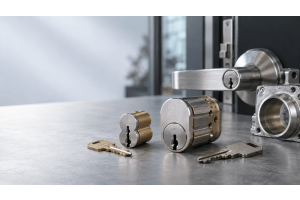
SFIC means Small Format Interchangeable Core. You can usually recognize it by the compact “figure-eight” face. The physical core shape is standardized enough that many commercial lock manufacturers offer hardware prepared to accept the SFIC format.
Here is where buyers get tripped up: physical fit is not the same as key-system compatibility. An SFIC core may slide into an SFIC-prepped lock and still be wrong for the building because the keyway, pin setup, or keying plan does not match. SFIC systems are commonly built in 6-pin and 7-pin configurations, so the existing system still needs to be identified.

Browse more commercial leversets at DoorsForPros.
What Is LFIC or FSIC?
LFIC means Large Format Interchangeable Core. Unlike SFIC, “LFIC” is not one universal cross-brand core shape. Large-format systems are usually built around a manufacturer’s own housing, core profile, keyway, and control setup.
Schlage often calls its large-format system FSIC, short for Full Size Interchangeable Core. Other manufacturers use LFIC for their large removable-core systems. So if a product listing simply says “LFIC,” that is not enough information to place a replacement order.

|
Single Thumb Rule |
Can SFIC and LFIC Be Interchanged?
No. SFIC and LFIC/FSIC use different physical core and housing formats, so one is not a drop-in replacement for the other. If a building is changing from one format to the other, compatible housings or lock hardware may also have to change.
If you are not sure whether you are looking at an interchangeable core, a conventional cylinder, or a different lock setup, the DoorsForPros Mortise vs. Cylindrical Lock guide can help with the larger lock-type question. The important point here is that you should identify the lock prep before buying the core.
How Can You Tell Which Core Format Your Lock Uses?
Start with what is already on the door. A few clear photos and markings usually tell you more than a product photo online.
-
Look at the core face. A compact figure-eight shape strongly points to SFIC. LFIC/FSIC profiles vary by manufacturer.
-
Find the lock manufacturer and model. Check the lever, trim, lock body, exit-device trim, or any paperwork from the original installation.
-
Read the markings on the current core. Brand, series, keyway, and pin information can narrow the match quickly.
-
Check the facility’s key records. A door schedule, master-key record, or past purchase order may already identify the core format and keyway.
-
Look for “less core” on the hardware description. That means the lock was intentionally supplied without its permanent interchangeable core.
-
If you still cannot identify the system, collect photos and the model information before placing a multi-door order.
What Does “Less Core” Mean?
“Less core” means the lock or cylinder housing is sold without the removable interchangeable core. It is not an incomplete product by mistake. It is prepared for a specific core format so the facility can supply the core that matches its own key system.
That matters on repeat commercial purchases. If a facility already runs SFIC, buying SFIC-prepped, less-core hardware lets the project stay within that core system. If the prep is full-size or manufacturer-specific, the replacement core has to match that system instead.
What Must Match Before You Order a Replacement Core?
Knowing “SFIC” or “LFIC” is only step one. Before you order, match the core to the lock and to the building’s key system.
|
Check |
What to confirm |
Why it matters |
|
Core format |
SFIC, manufacturer-specific LFIC/FSIC, or conventional |
Determines the physical housing or lock prep |
|
Lock/housing |
Manufacturer, series, and cylinder preparation |
Especially important for LFIC/FSIC |
|
Core family |
Existing brand and series markings |
Narrows the compatible housing and control system |
|
Pin configuration |
6-pin, 7-pin, or other system requirement |
Needs to match the core/keying setup |
|
Keyway |
The groove pattern the key slides into |
Determines which keys can enter and operate the core |
|
Keying |
Keyed different, keyed alike, master keyed, etc. |
Needs to match the facility’s access plan |
|
Control key |
Correct control key for the installed core system |
Needed to remove and install the core normally |
|
Quantity/spares |
Active doors plus planned spare cores |
Helps facilities handle turnover and future changes |
|
What is Keyway? A keyway is the shape of the groove in the cylinder that accepts a specific key profile. Keying describes which keys operate which locks—for example, keyed alike, keyed different, or part of a master-key system. |
Keep sensitive keying information controlled. Bitting lists, master-key charts, restricted-keyway records, and authorization documents should only be shared through the process your organization uses for key control.
What Information Should You Send a Supplier?
If you need a compatibility check, send enough information to identify both the core and the lock that accepts it. You do not need a perfect parts vocabulary; clear photos and model markings can do a lot of the work.
-
Lock manufacturer and model number, including any visible series or function information.
-
Photos of the lock, core face, and surrounding trim. If an authorized person can safely remove the core, include a photo of the removed core too.
-
Core markings such as brand, series, keyway, or pin count.
-
The current key-system requirement: keyed alike, keyed different, master keyed, restricted keyway, or another managed setup.
-
Whether the correct control key is available.
-
A door list and quantities for larger projects, instead of one total number with no opening details.
Should a Facility Stay With SFIC or LFIC?
If a building already has a documented interchangeable-core system that works well, the simplest replacement path is usually to stay compatible with that system. Changing formats can affect lock housings, spare inventory, control keys, key records, and future service across many doors.
SFIC can make sense when a project values a widely supported physical core format across compatible commercial hardware. LFIC/FSIC can make sense when the facility is already built around a manufacturer-specific key and core platform. Neither format is automatically “better” for every building.
The bigger goal is consistency. A documented, intentional core standard is easier for a facilities team to stock, service, and reorder than a mix of formats nobody can explain five years later.
Common SFIC and LFIC Ordering Mistakes
Most mistakes happen when one correct detail is treated as proof that the whole replacement is correct. Watch for these common problems:
Ordering from the acronym alone. “SFIC” tells you the physical format. “LFIC” still needs the manufacturer/system. Neither one tells you the entire keying specification.
Assuming every SFIC core will work because it fits. The physical format may fit while the keyway, pinning, keying, or control-key setup does not.
Treating LFIC as one universal large core. Large-format systems are manufacturer-specific. Identify the exact brand and core family.
Missing the words “less core”. A less-core lock is intentionally supplied without the permanent core. The correct core has to be specified separately.
Forgetting the control key. A facility can have working operating keys and still be unable to swap IC cores if the correct control key is missing.
Ordering a whole property from one sample door. Renovations and repairs can leave a building with mixed systems. Audit before you buy in volume.
Passing sensitive key records around casually. Treat bitting lists, master-key charts, restricted-keyway information, and authorization records as controlled security information.
SFIC vs. LFIC Replacement Checklist
Before you order a replacement core or a lockset supplied less core, make sure you can check every item below:
-
Core format identified: SFIC, manufacturer-specific LFIC/FSIC, or conventional.
-
Lock manufacturer and model recorded.
-
Compatible housing or lock prep confirmed.
-
Core manufacturer or family identified where needed.
-
Pin configuration confirmed.
-
Keyway confirmed.
-
Keying requirement confirmed.
-
Correct control key available or ordered through the proper process.
-
Door schedule checked for mixed systems before a bulk purchase.
-
Spare-core needs considered.
-
Sensitive keying information handled through the organization’s approved key-control process.
Key Takeaways
|
If you remember only six things 1. SFIC and LFIC/FSIC are different physical core systems and are not direct substitutes. 2. SFIC uses a standardized small format, but the keyway and keying still have to match. 3. LFIC/FSIC is manufacturer-specific, so the lock brand and core family matter. 4. A control key removes or installs an interchangeable core; it is not the same as the everyday operating key. 5. “Less core” means the hardware is prepared for a separately specified core. 6. For a bulk order, audit the doors first. One sample lock does not prove every opening uses the same system. |
Need to Confirm Core Compatibility Before You Order?
Start with the lock that is already on the door. Record the manufacturer and model, identify the core format, note the keyway and pin/system information, and confirm how the building is keyed. For multi-door work, put those details into a simple door schedule before you order.
For SFIC-prepped hardware, compare the Accentra SFIC less-core entry lever and browse commercial leversets. For full-size interchangeable hardware, the Schlage full-size interchangeable rim housing is a useful example of manufacturer-specific FSIC preparation.
Frequently Asked Questions
How do I identify the correct replacement core if the existing core has no clear model number?
Start with the lock manufacturer, the shape of the existing core, and any markings on the core or housing. Also check the facility’s key records, previous purchase orders, or door schedules. For LFIC or FSIC systems, identifying the manufacturer and core family is especially important because large-format cores are generally system-specific.
Can I use an SFIC core from a different manufacturer in my existing lock?
Possibly, if the lock is designed for the SFIC format, but physical fit alone is not enough. The keyway, pin configuration, keying, and control-key setup must also match the facility’s existing system. A core that fits the housing may still be unusable with the building’s current keys.
Can I keep my existing keys when replacing an interchangeable core?
That depends on the replacement core and the facility’s key system. The new core must support the correct keyway and be keyed to the required configuration. If the building uses a master-key system, restricted keyway, or other managed keying arrangement, those requirements need to be confirmed before ordering.
What happens if I order a lock marked “less core”?
“Less core” means the lock or cylinder housing is supplied without the removable interchangeable core. You will need to order or supply a compatible core separately. The core format, keyway, pin configuration, and keying must match the lock preparation and the facility’s existing system.
Do I need a control key to replace an SFIC or LFIC core?
Normally, yes. The correct control key releases the interchangeable core from its housing so it can be removed and replaced without disassembling the lockset. The control key is different from the everyday operating key and may also be different from a master key.
Can I switch an existing building from LFIC to SFIC?
Yes, but it may involve more than changing the cores. Because SFIC and LFIC/FSIC use different housings and physical formats, compatible cylinders, housings, or lock hardware may also need to be changed. The impact on existing keys, control keys, spare inventory, and future maintenance should also be reviewed.
How can I tell whether a replacement core will work with my existing lock housing?
Confirm the lock manufacturer and model, cylinder preparation, core format, and core family where applicable. Then verify the replacement core against the manufacturer’s current compatibility information. For LFIC or FSIC systems, the manufacturer and system family are especially important.
Should I replace only the failed core or the entire lock?
If the lock housing and hardware are in good condition and the problem is limited to the keyed core, replacing only the compatible core may be sufficient. If the housing, lock chassis, or other hardware is damaged, or if the facility is changing core systems, a core-only replacement may not solve the issue.
What should I check before ordering interchangeable cores for multiple doors?
Audit the doors first. Record the lock manufacturer and model, core format, keyway or core markings, pin configuration, keying requirement, and quantity for each opening. Older buildings may contain multiple core systems, so one sample door should not be assumed to represent the entire property.
How many spare interchangeable cores should a facility keep?
There is no single number that works for every property. The right spare quantity depends on the number of doors, turnover frequency, security procedures, and how quickly replacement cores can be obtained. For larger facilities, spare-core planning should be part of the overall key-control and maintenance process.

Share on Facebook

Share on X

Share on Pinterest
Recent Posts